In the Field: Operators Advance Mission Readiness with PDW
Jul 2, 2026

July 2, 2026: The best measure of a capability is how it performs in the hands of the operators who depend on it. Over the past several months, Soldiers and Marines across the U.S. military and allied partner forces have employed PDW systems during field training, coalition exercises, and live-fire demonstrations that reflect the realities of modern operations.
From building sUAS proficiency and strengthening interoperability with partner nations, to enabling precision effects and adapting to evolving mission requirements, these events demonstrate how mission-ready technology helps operators gain critical information, increase tactical flexibility, and make faster decisions at the point of need.

Soldiers assigned to the U.S Army’s 120th Infantry Regiment trained with the PDW C100 at Fort Bliss, reinforcing the growing role of small unmanned aircraft systems at the tactical edge.
As units continue integrating UAS into everyday operations, hands-on training with mission-ready platforms helps operators build the proficiency needed to employ these capabilities quickly and confidently under realistic field conditions. By familiarizing Soldiers with systems, they can rapidly deploy and adapt to changing mission requirements, training events like these help ensure critical reconnaissance and airborne capabilities are available when and where they are needed most.
Coalition Operations: Strengthening Interoperability with Allied Forces in the Philippines

During recent joint exercises, U.S. and Philippine forces employed the PDW C100 to support coalition operations focused on interoperability, situational awareness, and operational readiness.
The C100 helps deliver the reliable airborne capability operators need to collect, share, and act on critical information across multinational formations, strengthening coordination between allied forces in the field.
PDW continues to deliver rugged, mission-ready technology designed to help warfighters access and act on critical information wherever the mission takes them.
Mission Flexibility: Adapting to Evolving Requirements in Hawai’i
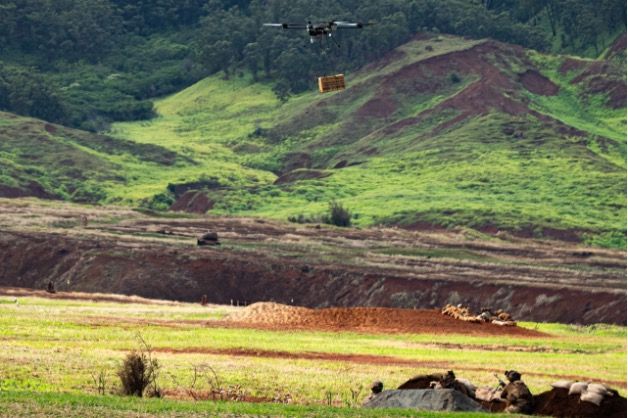
During a live-fire demonstration with the U.S. Army's 25th Infantry Division, the PDW C100 personified its "mothership" capability by transporting a substantial payload in support of the mission. Operators configured the system in a manner that reinforced a core principle behind the platform's design: flexibility. As mission requirements evolve, operators continue to find new ways to employ the C100 in support of operational objectives.
Built for durability and adaptability, the C100 enables units to integrate new payloads and capabilities without sacrificing the reliability required in demanding field conditions.
Coalition Readiness: Enhancing Interoperability During FLEETEX 250
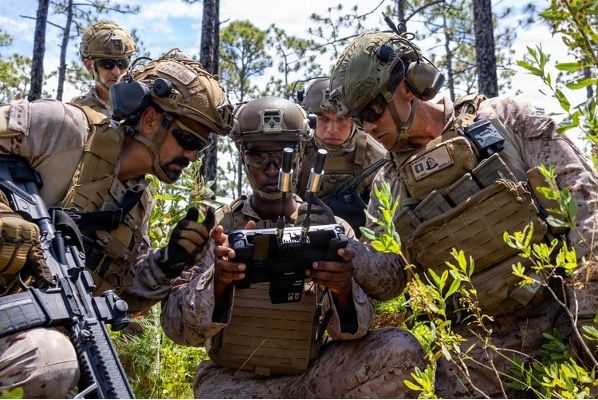
During FLEETEX 250 at Marine Corps Base Camp Lejeune, U.S. Marines with 1st Battalion, 2nd Marine Regiment demonstrated the PDW C100 to Spanish Marines as part of a company-level live-fire range. The event highlighted how shared unmanned capabilities strengthen interoperability between allied forces by providing a common platform for reconnaissance, situational awareness, and tactical decision-making.
As multinational forces continue to train and operate together in increasingly complex environments, systems like the C100 help ensure coalition partners can rapidly integrate, share information, and build the proficiency needed to execute missions as a unified force.
Live-Fire Training: Enabling Precision Effects from Above at Fort Campbell

Soldiers with the 101st Airborne Division demonstrated the C100 equipped with a Mechanical Release Device (MRD) during live-fire training to evaluate sUAS-enabled munition delivery. The demonstration highlighted how sUAS can provide greater standoff distance, flexibility, and precision while reducing the time between target identification and engagement.
Beyond munitions, the MRD supports a wide range of mission-specific payloads, from medical supplies to lifesaving equipment, giving operators the flexibility to deliver critical capabilities wherever they are needed.
These demonstrations reflect more than successful training events. They show how operators continue to expand the ways unmanned systems support the mission, translating adaptable technology into greater situational awareness, increased operational flexibility, and decisive capability at the tactical edge.
*The appearance of U.S. Department of War (DoW) visual information does not imply or constitute DoW endorsement.


